
Green Valley, AZ · Garage Door Service
Garage Door Opener Installation for Amado Homes
Opener installs for Amado's 1990s-era garage doors, priced against the area's median income, with the heat-rated hardware that lasts out here. We travel 10 miles from Green Valley.
- Repairs & new doors
- Springs & openers
- Serving 4 nearby communities
How Long It Takes
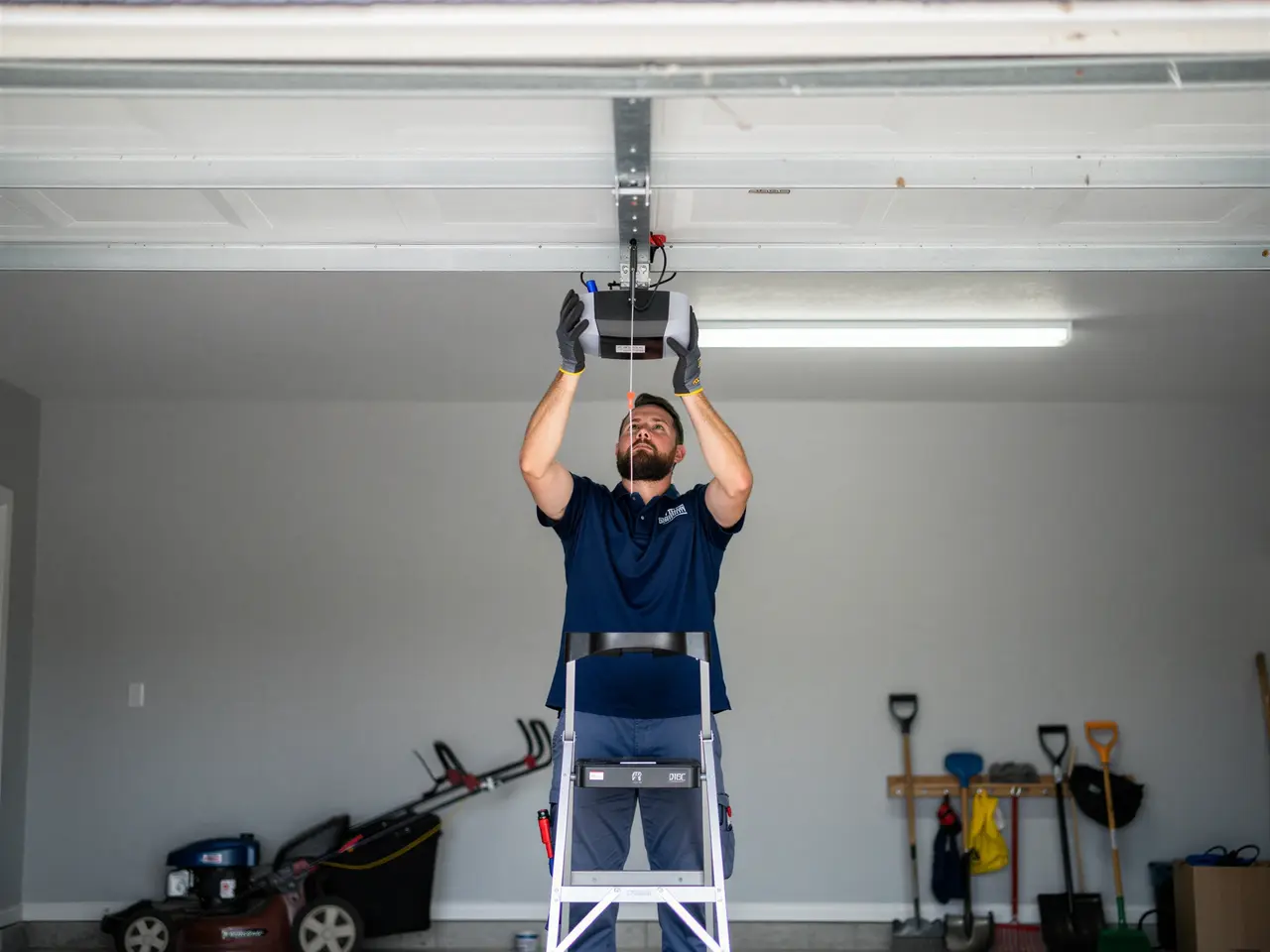
Amado sits about 10 miles out from our Green Valley base, and that drive is part of the schedule, not an afterthought. We don't keep a crew stationed in Amado, so a job here gets booked as a trip, not a drop-in. Once a tech is on site, swapping an opener on a standard residential door usually runs under two hours - mounting the rail, setting the trolley, wiring the wall control, and running the safety reversal test. Houses in this area went up mostly around 1995, which means most openers being replaced are originals or first replacements, not a patchwork of older retrofits. That actually speeds things up: one bracket pattern, one header height, fewer surprises. The time sink is almost never the install itself. It's whether the existing header bracket and door balance are still sound enough to hang a new motor on without extra work. If a spring is tired or a track is bent, that gets fixed first, and the opener goes in after, not instead of.
What the Repair Takes
With about 41 households in Amado, this isn't a market with a dozen different opener brands and vintages in rotation - it's a small, fairly uniform pocket of houses built in the same decade, which narrows down what parts and labor actually look like. A standard chain or belt-drive opener install means removing the old motor unit, checking the existing rail and header bracket for reuse, mounting the new unit, re-securing the safety sensors at the base of the track, and programming remotes or a keypad. On houses from the mid-1990s, the rail length and ceiling clearance are usually standard, so retrofitting a new unit onto the old mounting points is typical rather than the exception. What it doesn't take, on most of these jobs, is new framing or header reinforcement - that's a newer-construction problem, not a 1995-vintage one.
Doing It Yourself
A boxed opener kit looks simple enough - rail, motor head, sensors, a wiring diagram. Where people get hurt, or just stuck, is the safety reversal setup and the force adjustment. Set the down-force too high and the door keeps closing on something it shouldn't. Mount the photo-eye sensors a half inch off plumb and they'll work fine for a week, then fail in the heat once the bracket flexes. Given how severe the heat runs through this area, plastic sensor brackets and gear housings take more thermal stress here than in a milder climate, and a loose or misaligned mount shows up faster, not slower. If you're comfortable on a ladder and know your way around a torque wrench, the mechanical half of the job isn't out of reach. The electrical tie-in and the safety calibration are where we'd tell you to stop and call.
Why This Fails Locally
The failure pattern here isn't about Amado being remote - it's about what severe heat does to opener hardware that was never built with shade in mind. Circuit boards in openers mounted on an unshaded header bake all afternoon, and the capacitors and logic boards degrade faster than the motor itself does. Belt-drive units, common in homes built in the mid-1990s like most of this area, rely on rubber-toothed belts that stretch and crack under sustained heat cycling - expansion in the day, contraction at night, every day, for years. Chain-drive units skip that specific failure but trade it for more noise and more frequent lubrication needs in dusty, hot conditions. Either way, the opener's control board, not the motor, is usually the first thing to quit in houses like these, and it quits years before a cooler-climate equivalent would.
What You Pay
Across the broader service area that includes Amado, median household income runs about $82,273. That number matters for one decision: repair-or-replace on an opener that's acting up but not dead. At that income level, replacing a failing opener outright with a heat-rated unit is usually the better math than chasing intermittent board failures or chain-drive wear with repeated service calls - the parts and labor on two or three repair visits can approach what a new unit costs installed. We don't have a posted price list to quote here, and travel from Green Valley is part of any job cost in Amado, but the repair-versus-replace line tends to land in favor of replacement once a unit is past its control-board life, rather than chasing it repair by repair.
What Can Go Wrong
The most common surprise on an Amado opener job isn't the opener - it's what's behind it. A house built around 1995 with its original spring and track hardware still in place can mean a torsion spring that's near the end of its cycle life, discovered only once the old opener comes off and the door is manually tested. That's not a hidden sales pitch; it's just common on original hardware pushing thirty years. We'll flag it before doing anything, not after. One honest limit: we don't stock every opener model or rail length on the truck for every call, so an unusual ceiling clearance or a discontinued rail size can mean a second trip once the right part is in hand. For more on what we cover across the wider area, see our <a href="/service-area/amado/">Amado service area page</a> or the <a href="/garage-door-opener-installation-green-valley-az">Green Valley opener installation page</a>.
Frequently asked questions
Do you have a crew based in Amado?
No. We run out of Green Valley, about 10 miles away, and travel out for every Amado job. There's no local depot here, so installs get scheduled as trips rather than same-hour drop-ins.
Will a new opener fit my old rail and bracket?
On most Amado houses, built around 1995, the header height and mounting pattern are standard enough that a new opener reuses the existing rail and bracket. We check this on site before quoting anything extra.
Why do openers seem to fail faster out here?
Severe heat is hard on opener circuit boards and belt material. Units mounted on an unshaded header take more thermal cycling than the same opener would see in a cooler climate, and the control board is usually the first part to go.
Is it worth repairing an old opener or just replacing it?
Once a unit's control board is failing intermittently, repeated service calls often add up close to the cost of a new heat-rated opener installed. Given income levels across the area, replacement is usually the better call at that point.
Book garage door service in Green Valley
Call now or request a quote - tell us what the door is doing and where you are.