Green Valley, AZ · Garage Door Service
Garage Door Service for Green Valley's 1986-2006 Housing Stock
Green Valley homes built 1986-2006 are hitting the age where original springs and rollers fail from decades of desert heat. Here's what that looks like and how to fix it.
- Repairs & new doors
- Springs & openers
- Serving 4 nearby communities
What You Are Seeing
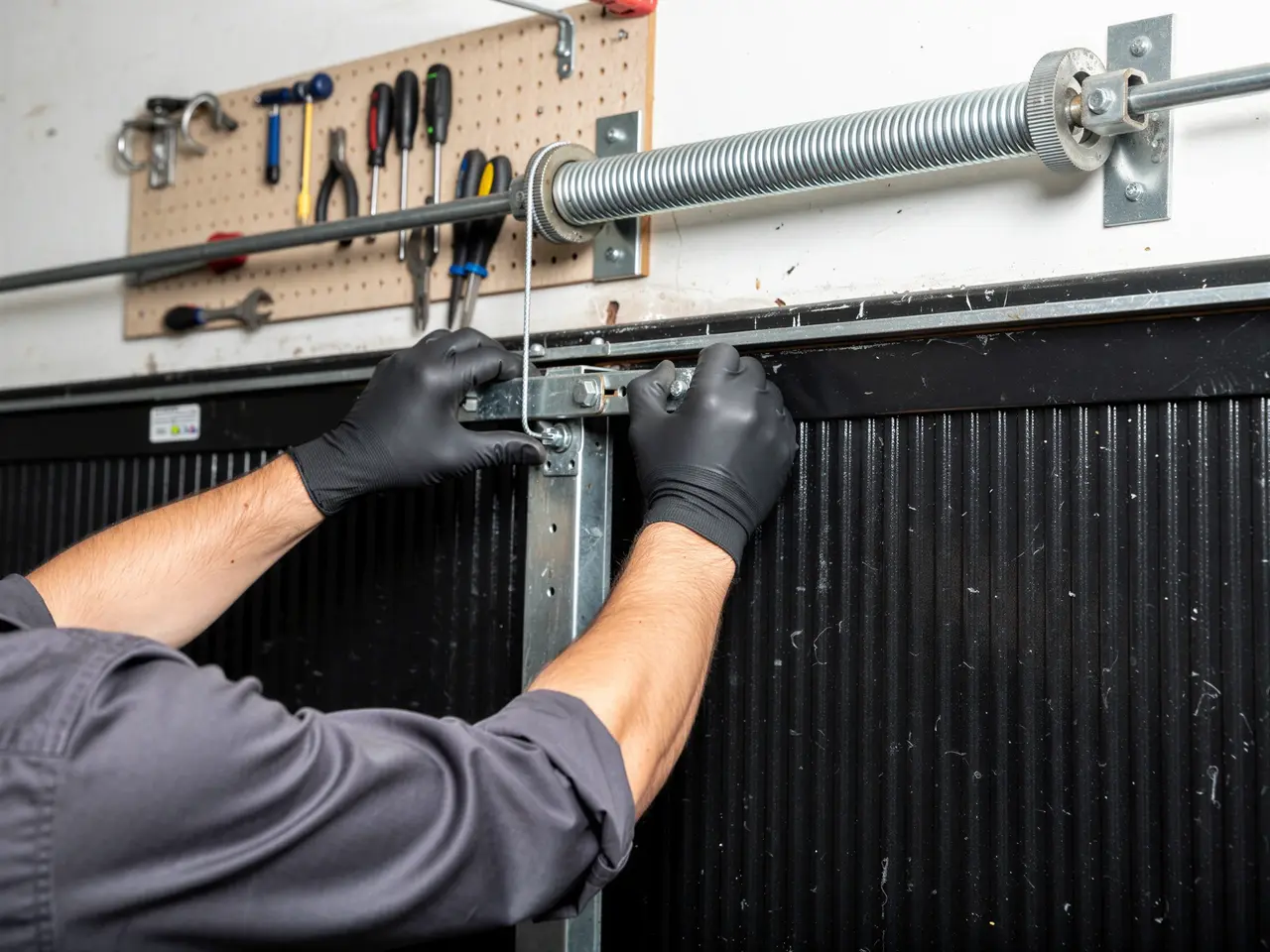
Most houses in this area went up between 1986 and 2006, with a median build year around 1996 and four named subdivisions sharing that same builder-grade stock. That means a lot of garages are running on the torsion spring and roller hardware the house came with - now somewhere between 18 and 38 years old. The symptoms show up the same way almost every time: the door starts slow, then jerky, then it hangs up six inches from the floor. You hear a grinding or popping sound when it travels. The opener strains, reverses halfway through a close, or just stalls. Sometimes a cable starts fraying where it winds onto the drum, which is the hardware telling you the spring on the other side has already lost most of its tension and the cable is picking up slack it was never built to carry. None of this is random. It's the predictable end of a spring and roller's service life, and in a housing stock this uniform in age, we see it on the same streets in waves rather than as isolated breakdowns.
Why This Fails Locally
The HEAT severe climate band this area sits in is the accelerant. Torsion springs are rated by cycle count, but that rating assumes a lubricant that stays viscous. Sustained high heat thins and breaks down spring lubricant faster than it would in a milder climate, so a spring here can reach the end of its real-world life well before its theoretical cycle count runs out. Nylon rollers crack and flatten sooner under the same heat load, and steel track and door panels expand during the day and contract overnight, which loosens fasteners and track alignment over years of that cycle. Because so much of the housing here was built in the same 20-year window, a large share of the 3,810 owner-occupied houses in the service area are now sitting at the point where original hardware - sized and lubricated for a different, milder assumption - is failing. It's not that these doors were built wrong. It's that builder-grade springs and rollers were never spec'd for two more decades of this kind of heat exposure.
Doing It Yourself
Some of this is fair to handle yourself. Wiping down tracks and applying a silicone-based lubricant to rollers and hinges twice a year costs nothing and genuinely slows the heat damage described above. Checking that the bottom seal hasn't hardened and cracked is a five-minute job you can do from the driveway. What you shouldn't touch is the torsion spring itself. It's wound under enough tension to cause a serious injury if it lets go while you're working on it, and the tools to do it safely aren't something most homeowners keep in the garage. If your door is reversing, grinding, or hanging unevenly, that's a spring or cable problem, not a lubrication problem, and no amount of WD-40 fixes a spring that's already lost its temper from heat cycling. We won't talk you into a full door replacement if a spring and roller service will do the job - but if the door itself is original to a 1990s build and the panels are warped or rusted through, replacement is usually the cheaper long-term call than patching hardware around a dying door.
How to Book
If your door is slow, loud, or hanging unevenly, that's worth a look before a cable snaps or the opener motor burns out trying to compensate. We cover Green Valley and the surrounding area, including Quail Creek, Rancho Sahuarita, Sycamore Canyon, Corona de Tucson, Summit, Tubac, and Amado. Get in touch here to set up a service call, and have a rough idea of your door's age and any sounds or symptoms ready - it helps us bring the right spring and roller stock on the truck the first time instead of a second trip.
Frequently asked questions
Why do garage door springs fail so much sooner here than people expect?
The severe heat in this area thins spring lubricant faster than it would in a milder climate, so the spring loses its working life before it hits the cycle count it's rated for. Combine that with a housing stock mostly built between 1986 and 2006, and a lot of original springs are aging out at the same time.
Is it normal for a door built in the 1990s to still have its original spring?
It happens more often than you'd think, since a well-maintained spring can last decades under normal conditions. But in this climate, heat cycling shortens that window, so a spring from a 1996-era build is usually well past due for replacement even if it hasn't broken yet.
Can I just lubricate the rollers instead of replacing them?
Lubrication helps and is worth doing twice a year, but it doesn't reverse cracking or flattening in nylon rollers that's already happened from heat exposure. If a roller is visibly cracked or the door is already grinding, lubricant will quiet it briefly, not fix it.
By Neighborhood
Garage Door Service across the Green Valley area
We also handle garage door service in these Green Valley-area suburbs.
Book garage door service in Green Valley
Call now or request a quote - tell us what the door is doing and where you are.