
Green Valley, AZ · Garage Door Service
What an Older Door Is Worth Fixing, Not Replacing, in Green Valley
Most Green Valley houses date to 1986-2006. Here's how that build era and our severe desert heat decide whether a repair holds or a new door makes more sense.
- Repairs & new doors
- Springs & openers
- Serving 4 nearby communities
The Common Mistake
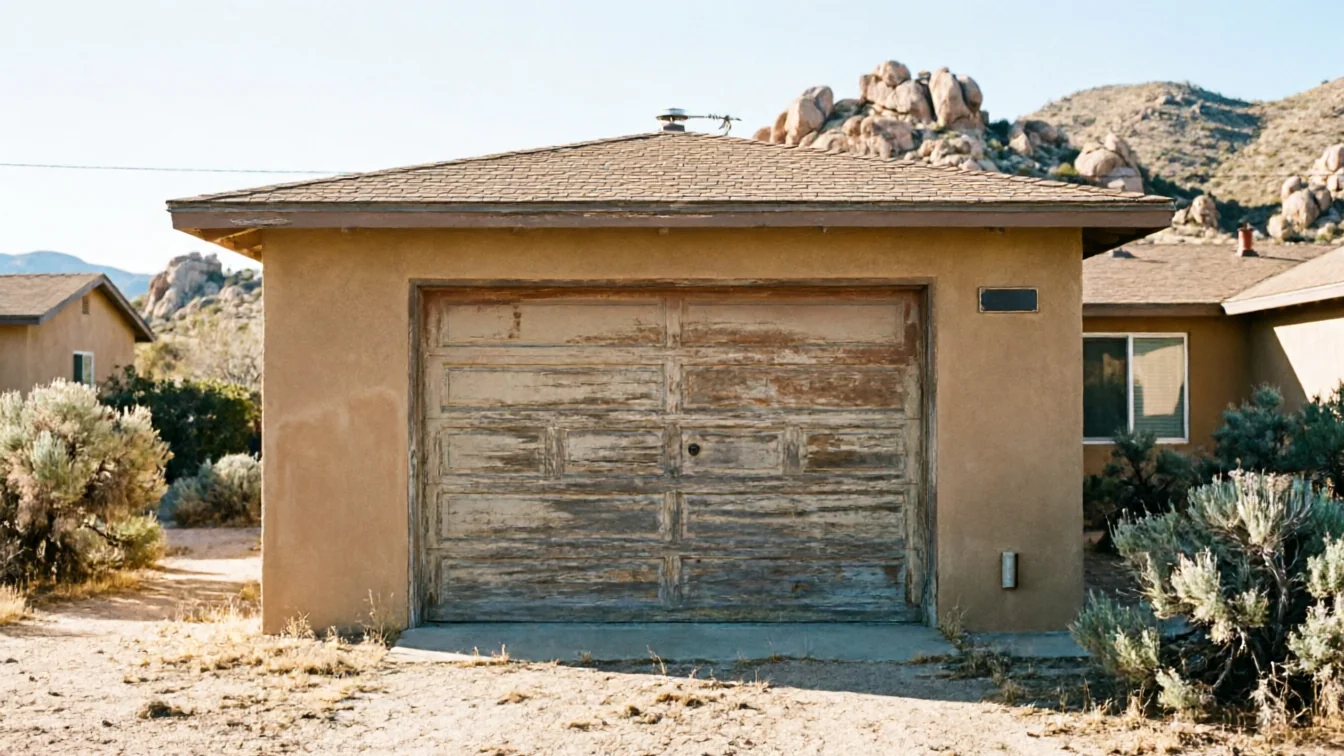
The mistake we see most is homeowners treating every door built in the same stretch of years the same way. Housing across this area went up mostly between 1986 and 2006, with the median around 1996, so a lot of doors on the road right now are somewhere between 18 and 38 years old. That's a wide spread. A 1988 door and a 2004 door came with different springs, different track gauges, and often different opener models, even if the house next to each looks the same from the street. People call wanting a new door because the opener grinds, when the opener is five years old and bolted to a perfectly sound 1996 door frame. Or they want us to patch a spring on a door whose galvanized skin is pitted through from three decades of sun. Age alone doesn't tell you which one you've got. What's actually failing does. We look at the spring wind, the track alignment, and the panel condition separately before we say repair or replace, because lumping them together is how people end up paying for the wrong job.
What You Pay
We're not going to put a number here that doesn't match what shows up on your specific door, but the shape of the cost is worth knowing. A broken torsion spring on a door from the 1986-2006 build stock is usually a straight repair - the hardware was built heavy enough that the rest of the system is often fine. Where cost climbs is when the opener, the track, and the springs all show wear at once, which happens more on the early end of that build range (late 1980s) than the late end. At that point you're not buying one fix, you're buying three, and a full door often comes out close to what three separate repairs would run. With median household income in the service area at $82,273 and most households owning rather than renting, we find most people here want the honest comparison laid out before they commit, not a push toward whichever number is bigger.
What Local Conditions Do
Green Valley sits in a severe heat band, and that does specific things to a garage door system that a mild climate never would. Steel tracks expand and contract daily against stucco-and-block garage openings, which over enough summers walks the track out of alignment - you'll feel it as a door that binds a few inches from the floor. Nylon rollers dry out and crack years before their rated life in this heat; the grease in a torsion spring's coil breaks down faster too, which is part of why spring failures here tend to come earlier than the national average for a same-age door. Opener circuit boards and sensor eyes also take a beating sitting in a garage that can run well above ambient on a closed afternoon. None of this is unique to one house - it's what the climate does to every door in the 1980s-90s stock across this area, which is most of what's out there.
What Is Going On
Put the housing age and the climate together and you get a pattern we see across the four main pockets of 1980s-90s stock in the service area: the door panel itself usually outlasts its hardware. Steel doors from that era were built thick. What fails first is almost always the moving parts - springs, rollers, the opener - not the door skin. That means a lot of doors people assume are too old to bother with are actually good candidates for a hardware overhaul instead of a full replacement. The exception is doors that have taken direct, sustained sun exposure for most of their life, where the steel itself has warped slightly at the panel seams; that's a repair that won't hold, and we'll tell you so instead of billing you for it twice. If you're near Quail Creek, Rancho Sahuarita, or further out toward Sycamore Canyon or Corona de Tucson, the same build-era and heat logic applies - the housing stock age is consistent across the wider service area, even where individual streets vary.
Frequently asked questions
My house was built in the early 1990s - is my garage door original?
It's possible. Most housing in the service area was built between 1986 and 2006, median around 1996, and original builder-grade doors from that period are still in plenty of garages. The panel is often fine; springs, rollers, and openers wear out well before the door itself does.
Why did my spring break with no warning?
Torsion springs are rated for a cycle count, and our severe heat accelerates the grease breakdown inside the coil, so springs here often fail earlier than the same part would in a milder climate. It's rarely sudden damage - it's wear that built up quietly.
Should I replace the whole door or just fix what broke?
Depends on what's actually wrong. If the steel panel is straight and the failure is springs, rollers, or the opener, a repair usually makes sense given how heavy the original hardware from this build era was. If the panel itself has warped from years of direct sun, repair won't hold and replacement is the honest answer.
Related garage door services in Green Valley
More garage door guides
Book garage door service in Green Valley
Call now or request a quote - tell us what the door is doing and where you are.