Green Valley, AZ · Garage Door Service
What Your Garage Door Is Up Against in Green Valley
Most Green Valley houses went up between 1986 and 2006, and the desert heat has been working on the same hardware ever since. Here's what that actually means for your door.
- Repairs & new doors
- Springs & openers
- Serving 4 nearby communities
The Common Mistake
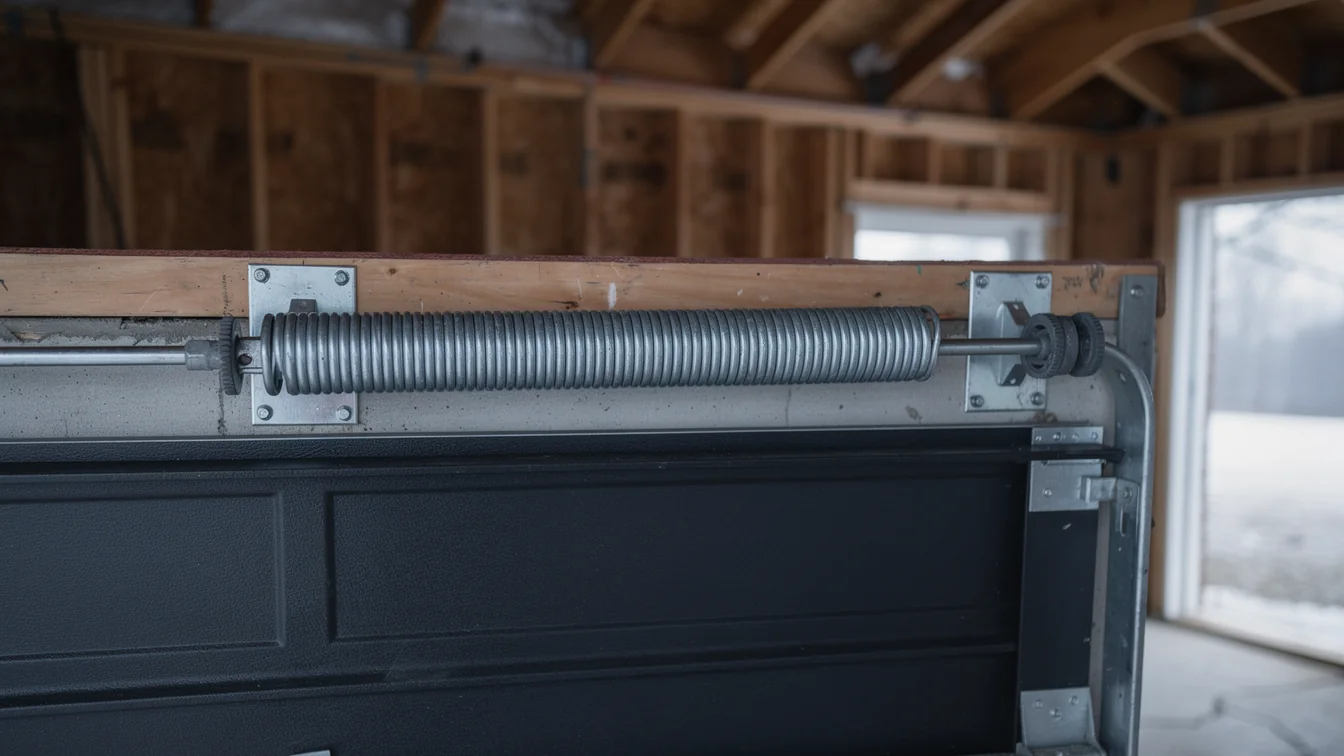
The mistake we see most is an owner who treats the garage door like it's the same age as the roof shingles, meaning untouched since the house went up. Most of the housing stock here was built between 1986 and 2006, with the median landing around 1996. That means a lot of torsion springs, nylon rollers, and first-generation opener logic boards are pushing 25 to 35 years old, and they've spent every one of those years in a climate where heat severity is the dominant stress, not cold. Owners wait for a loud bang or a door that won't budge before they call. By then the spring has usually already fatigued past the point where lubrication or adjustment does anything - it needs replacing, not babying. The part that actually needed attention years ago was the cheap plastic idler pulley or the roller bracket, worn thin by thousands of heat-cycles, not the motor everyone blames first. If your door is original to a house from that build window, the question isn't whether the spring will go. It's whether it goes on a Tuesday afternoon or jams the door shut when you're trying to leave for work.
What You Pay
We don't have a flat number to quote you here, and anyone who gives you one over the phone without seeing the door is guessing. What we can tell you is what drives the decision. In a service area where median household income runs around $82,273, most owners with a door from the 1986-2006 stock face a real choice at failure time: replace the whole assembly or patch the one broken part. A single snapped torsion spring on an otherwise sound steel door is a straightforward swap. A door where the spring, rollers, and opener logic board are all original and all failing at once is a different conversation, and patching one part just means you're back out here in six months for the next one. We'll tell you which situation you're in before we touch anything, including when replacement is the cheaper path over two or three years even though the sticker number is bigger today.
What Local Conditions Do
Heat severe isn't a label we picked for marketing - it's the operating condition your door lives in every single day. Torsion springs lose temper faster under sustained high heat than they would in a milder climate, because the steel is cycling through expansion and contraction while it's already working under load. Lubricant that would last a season elsewhere breaks down and gums up faster here, which is why a door that felt smooth in spring can start grinding by late summer. Nylon rollers and plastic end bearings, common in doors from the 1986-2006 build era, get brittle and crack under UV and heat long before the metal parts give out. None of this is unique to one house - it's the same story across Quail Creek five miles northeast and Rancho Sahuarita eight miles north, both built in roughly the same window. The honest limit here: we can't un-age a 30-year-old spring with a squirt of oil. Past a certain point, maintenance buys you weeks, not years.
What Is Going On
Put the two facts together and the pattern is obvious once you see it. A service area with 3,810 owner-occupied houses, most built in a 20-year window centered on 1996, sitting in a climate that runs hard on heat rather than cold, means a large share of original garage door hardware is aging out at roughly the same time. That's not a coincidence tied to one bad batch of springs - it's just steel and plastic doing what steel and plastic do after three decades of summer heat cycling. Across 5,010 households total, that adds up to a steady stream of doors hitting the same failure points: torsion springs losing temper, nylon rollers cracking, early opener boards failing. If your house falls in that build range, the smart move is checking the spring and rollers before they fail on their own schedule, not after. We don't push inspections nobody needs, but a door that old, in this climate, is worth a look before next summer, not during it.
Frequently asked questions
Why do garage door springs fail so often here compared to other places?
It comes down to heat, not cold. Torsion springs under constant load lose their temper faster when they're cycling through high summer heat for months at a time. Combine that with a lot of local doors being 25-plus years old, built in the 1986-2006 window, and you get springs that are simply worn out from heat fatigue rather than any single dramatic failure.
Is my opener original to the house if it was built in the 1990s?
It's possible, especially if no one's mentioned a replacement. Openers from that era used earlier circuit boards that don't hold up as well to decades of heat exposure as newer units. If yours is original, grinding, intermittent response, or a board that resets itself are signs worth checking before it quits outright.
Should I repair or replace an old garage door?
If one part has failed - a spring, a cable - and the rest of the door is sound, repair makes sense. If the door is original to a 1986-2006 build and multiple parts are failing together, replacing the whole assembly is usually the better value over the next few years rather than patching one failure at a time.
Related garage door services in Green Valley
More garage door guides
Book garage door service in Green Valley
Call now or request a quote - tell us what the door is doing and where you are.