
Green Valley, AZ · Garage Door Service
Roller Replacement for Summit's 1986-Era Garage Doors
Summit's houses mostly went up in 1986, meaning steel sectional doors on original rollers that have spent three decades baking in Arizona heat. Here's what that repair looks like.
- Repairs & new doors
- Springs & openers
- Serving 4 nearby communities
Doing It Yourself
Most garages in Summit went up around 1986, which puts them squarely in the steel sectional door era - wide double-car doors, usually 16 feet, hung on galvanized track with factory rollers that were never meant to last forty summers. A lot of those original rollers are plastic-stemmed, and plastic doesn't age well here. Severe summer heat softens the nylon or cracks it outright, so the roller stops rolling and starts grinding, chewing up the track edge as it goes.
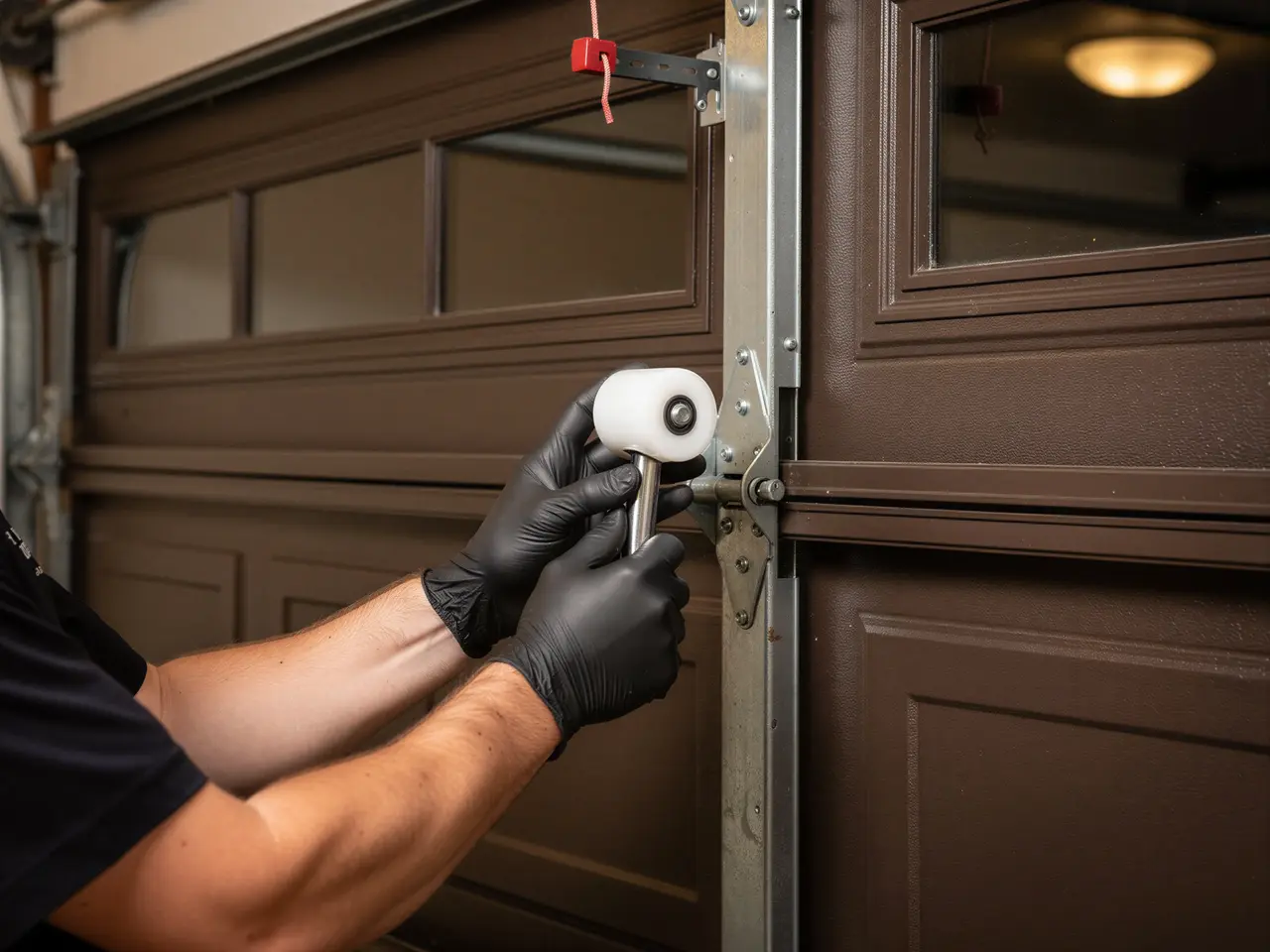
You can replace a single roller yourself if the door is down and the spring is relaxed - it's a matter of pulling the roller stem from the hinge bracket and sliding a new one in. Where people get hurt is the two end rollers nearest the torsion spring. Those brackets carry cable tension, and loosening the wrong bolt on a wound spring can snap a bracket loose fast. If your door is sagging on one side or a roller has already jumped the track, that's not a one-roller job anymore - call it in rather than guess at it.
How to Book
We run this job out of Green Valley, about 16 miles down from Summit, so there's no walk-in counter here and no same-day promise we can make for this address - we schedule the drive. Tell us the door's age when you call; if it's original to a 1986 build, we'll bring the longer-stem rollers that door size actually takes rather than guessing on-site. You can also start from the Summit service area page to see what else we cover out this way, or check the general roller replacement page for how the job itself typically runs.
What the Repair Takes
On a door this age, the fix usually starts with backing off tension on the torsion spring so the cables go slack - you can't safely pull hinge rollers on a loaded door. From there it's roller by roller: pull the stem, check the hinge bracket for wear (steel brackets from 1986 stock often have egg-shaped roller holes by now from decades of plastic rollers grinding against them), and seat the new roller. If the track itself has flat spots or bends from a roller that jumped it, that section gets straightened or swapped before anything rolls smooth again.
Full sets - all ten rollers on a double door - usually run faster than people expect, since there's no new opener wiring or panel fitting involved. If a bracket is too worn to hold a new roller true, that's an extra part, not a bigger job, but it does mean we can't always quote the full price over the phone before we've had eyes on the door.
Parts We Carry
We stock sealed-bearing nylon rollers in both the 2-inch and 3-inch stem lengths, which covers the hinge spacing on most of the sectional doors built through Summit's main construction years. Nylon is the right call for this heat band - it runs quieter than steel and doesn't need the lubrication steel rollers demand to keep from screeching by August. For heavier doors or anyone wanting a harder-wearing roller than a 1986-era door originally shipped with, we carry steel ball-bearing rollers too.
What we don't keep on the truck is every oddball roller stem length from doors that have already been retrofitted with aftermarket track - those sometimes need an order, which is the one honest delay in an otherwise same-visit repair.
What Can Go Wrong
The most common failure we see on Summit's 1986-vintage doors is a plastic roller that's cracked from heat cycling and finally splits under load, letting the hinge drop into the track and bind the whole panel. The second is a bent track from months of a bad roller grinding sideways before anyone noticed - by the time the door is loud, the track edge is often already deformed, which means a track section joins the roller order.
Less common but real: original hinge brackets worn oval from thirty-plus years of roller wobble. A new roller in an oval bracket will still wobble, so the fix doesn't hold. We flag that during the visit rather than send a roller out the door that'll just loosen again in a season.
Frequently asked questions
How do I know if my rollers are original to the house?
If your Summit house was built around 1986 and the door has never been replaced, there's a good chance the rollers are original or close to it - look for plastic rollers with visible cracking, flat spots, or a stem that's gone yellow and brittle. If the door grinds or hesitates at the same spot every time, that's usually the cracked one.
Why do plastic rollers fail faster out here than they might elsewhere?
Nylon rollers soften and crack under sustained high heat, and this area's summer temperatures sit in the severe range for that kind of material fatigue. A roller that might last two decades in a milder climate can crack well before that here, especially on a door that's already thirty-plus years old.
Can you come out the same day I call?
We work this job out of Green Valley, roughly 16 miles from Summit, so we schedule rather than promise same-day. Tell us your door's age and symptoms when you call and we'll bring the right roller stems for a door of that vintage.
Is it worth replacing just the rollers or should I replace the whole door?
If the panels are solid and the track is straight, rollers alone usually fix the noise and binding. Where the hinge brackets are worn oval or the track has multiple bent sections, roller replacement won't hold for long and the door is a better conversation for a full inspection.
Book garage door service in Green Valley
Call now or request a quote - tell us what the door is doing and where you are.